Electric mountain bike: full suspension or hardtail? How to choose
Full suspension or hardtail? The real criteria for choosing your electric mountain bike: terrain, budget, maintenance, comfort. Comparison and advice from the shop.
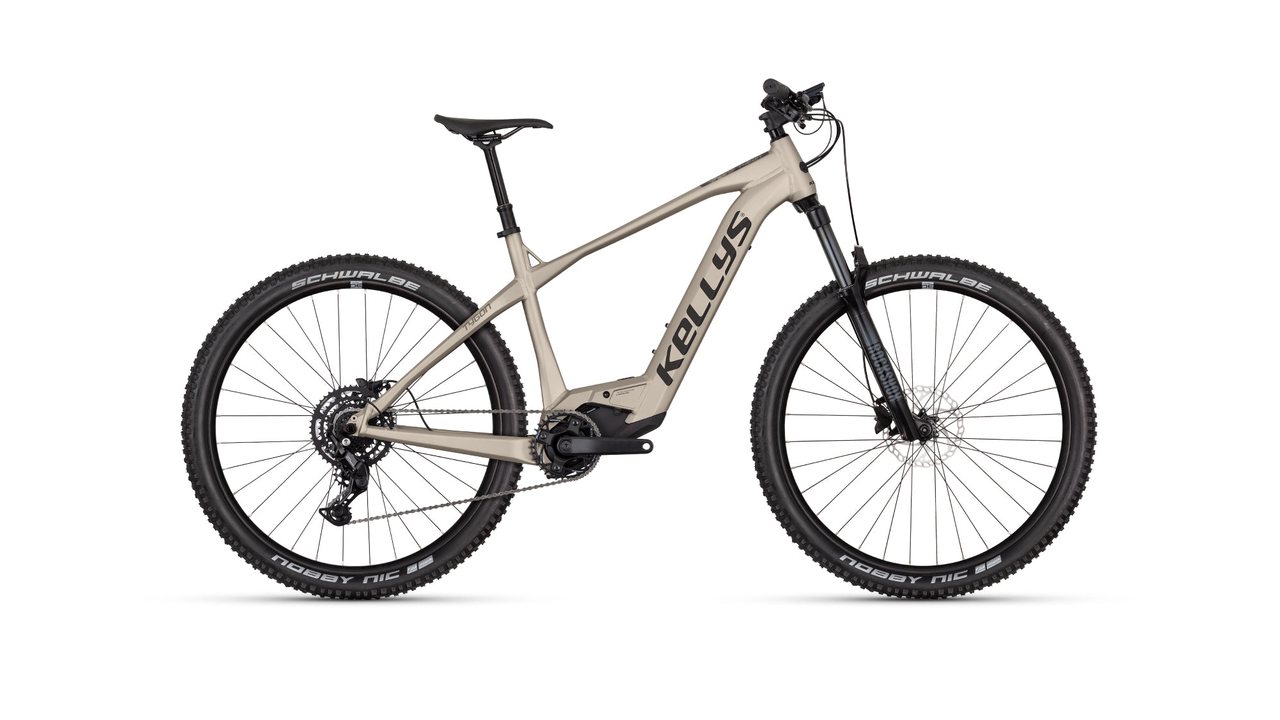
It’s the question we hear most often in the shop when we talk about an electric mountain bike : should you go for a full-suspension bike or a hardtail? There is no universal right answer. There is, however, an answer that fits your terrain, how you actually ride and your budget. Here’s how to decide without getting it wrong.
Hardtail or full suspension: the difference in two minutes
The distinction is purely mechanical. A hardtail has suspension at the front only: a telescopic fork. The rear of the frame is a rigid triangle, in one piece.
A full-suspension bike adds a shock absorber at the rear, between the front triangle and the hinged rear swingarm. Both wheels therefore filter out the bumps. This adds pivots, bearings and weight — and a lot of comfort.
On an electric mountain bike, this difference matters more than on a conventional mountain bike: the motor and battery already add several kilos, and the average speed, uphill as well as downhill, is higher. The suspension works harder.
The hardtail: simple, efficient, economical
Its strengths
- Price. For the same budget, a hardtail almost always offers a better motor, a better battery and better brakes than a full-suspension bike at the same price. The money saved on the rear shock goes into the rest of the bike.
- Efficiency. A rigid rear triangle doesn’t “bob”: all your pedalling energy goes to the wheel. On smooth tracks, forest paths or roads, that’s a real advantage — and you feel it in the range too.
- Maintenance. No rear suspension bearings to keep an eye on, no shock to service. Fewer wear parts, so fewer trips to the workshop.
- Weight. Usually 2 to 3 kg less than a comparable full-suspension bike. That matters when loading the bike onto a bike rack or carrying it into a storage room.
Its limits
As soon as the terrain gets rough — roots, rock gardens, technical descents — a hardtail demands more riding skill. Your legs and arms have to absorb what the bike doesn’t filter. On a long, rough ride, fatigue sets in sooner, and grip on descents is less consistent: the rear wheel leaves the ground more easily.
The full-suspension bike: comfort and safety on rough terrain
Its strengths
- Traction. This is the most underrated argument. A rear wheel that stays in contact with the ground transmits the motor’s torque better. On a technical climb, a full-suspension bike grips where a hardtail spins.
- Comfort. Vibrations and impacts are largely filtered out. On long rides, the difference for your back, wrists and neck is clear. It’s a health criterion, not a luxury.
- Safety on descents. Better contact with the ground, so better braking and better line holding.
Its limits
A full-suspension bike costs more to buy and to run: the rear shock needs periodic servicing, and the pivot bearings wear. It’s heavier, and on smooth terrain, some of your pedalling energy goes into the suspension if it isn’t set up carefully (most modern shocks have a lockout or a “pedal” mode to limit this).
Four questions to decide
1. Where do you really ride?
Not where you’d like to ride: where you ride every week. Forest paths, trails in the Vosges foothills, greenways, a few rocky sections? A hardtail is more than enough. Technical singletrack, steep descents, long rides in the mountains? That’s where a full-suspension bike comes into its own.
2. What’s your total budget?
Think about the whole package. An entry-level full-suspension bike with a basic shock and average brakes will often be less satisfying than a good hardtail at the same price. On an electric bike, the quality of the motor, the battery and above all the brakes matters more than the number of suspension units.
3. How many kilometres a year?
Occasional use (a few rides a month) is very well served by a hardtail. Once your riding becomes regular and intensive, the comfort of a full-suspension bike changes everything — and its extra maintenance cost is justified.
4. Do you have back or joint problems?
If so, the question is quickly settled: a full-suspension bike, or failing that a hardtail with wide, low-pressure tires and a suspension seatpost. It’s something we always discuss during a test ride.
Summary table
| Criterion | Hardtail | Full suspension |
|---|---|---|
| Price for equal spec | Advantage | Higher |
| Comfort on rough terrain | Adequate | Clear advantage |
| Efficiency on the flat | Advantage | Good (with lockout) |
| Traction on technical climbs | Adequate | Advantage |
| Maintenance | Simple | Shock + bearings |
| Weight | Advantage | Heavier |
Our advice by profile
Family rides, gravel paths, mixed road and forest trips: a hardtail electric mountain bike is the rational choice. Put the budget into the brakes and the battery.
Sporty trail rides, regular climbing, varied terrain: both have their case. Come and try both on the same day — it’s the only way to feel the difference.
Enduro, technical descents, long rides: a full-suspension electric mountain bike, no hesitation.
You can browse our whole range on the electric mountain bike page. And remember a regulatory point that’s often forgotten: an electric-assist mountain bike (e-bike) is assisted up to 25 km/h on public roads in France. Beyond that, the assistance cuts out and you pedal normally. A bike that assisted at higher speeds would fall into another legal category, with compulsory registration and insurance.
FAQ
Is a hardtail really less comfortable?
On roads and smooth paths, the difference is small, especially with wide tires at low pressure. It’s on rough terrain — roots, stones, descents — that the gap becomes obvious.
Does a full-suspension bike use more battery?
Slightly, because of the extra weight and a small loss of efficiency. In practice, riding style, the assistance level you choose, tire pressure and the amount of climbing weigh far more on the range than the type of frame.
What maintenance does a full-suspension bike need?
On top of the usual maintenance (drivetrain, brakes, tires), the rear shock and the fork need periodic servicing, and the pivot bearings should be checked once or twice a year depending on use. Our workshop takes care of it.
The best way is still to try them
A comparison table will never replace ten minutes on a trail. We have both types in our Obernai shop, and a test ride settles in one outing what three hours of reading leaves up in the air. Contact us to book a test ride or ask your questions.
A question about your machine? We’ll take care of it.
Diagnosis, adjustment, bringing a machine back within the rules: we answer at the counter just as on the phone, no appointment needed.
Read next
Dualtron Thunder, Storm or Victor: which one to choose in 2026?
Dualtron is one of the best-known brands in the world of high-end electric scooters. Three models come up again and…
Speed pedelec or 25 km/h e-bike: how to choose?
Five years after we started selling speed pedelecs, we're seeing an unexpected acceleration. Here's what we've learned on the ground.
Electric bike or speed bike for commuting?
25 km/h or 45 km/h? Distance, real time saved, overall cost and route: the four criteria that decide between an…