
Commuting to work in Strasbourg by electric scooter: the guide
Commuting to work in Strasbourg by electric scooter is possible, pleasant and often quicker than you'd think. With the densest cycle network in France, a compact city centre and daily traffic jams at rush hour, the Alsatian capital is ideal territory for micro-mobility. Here…
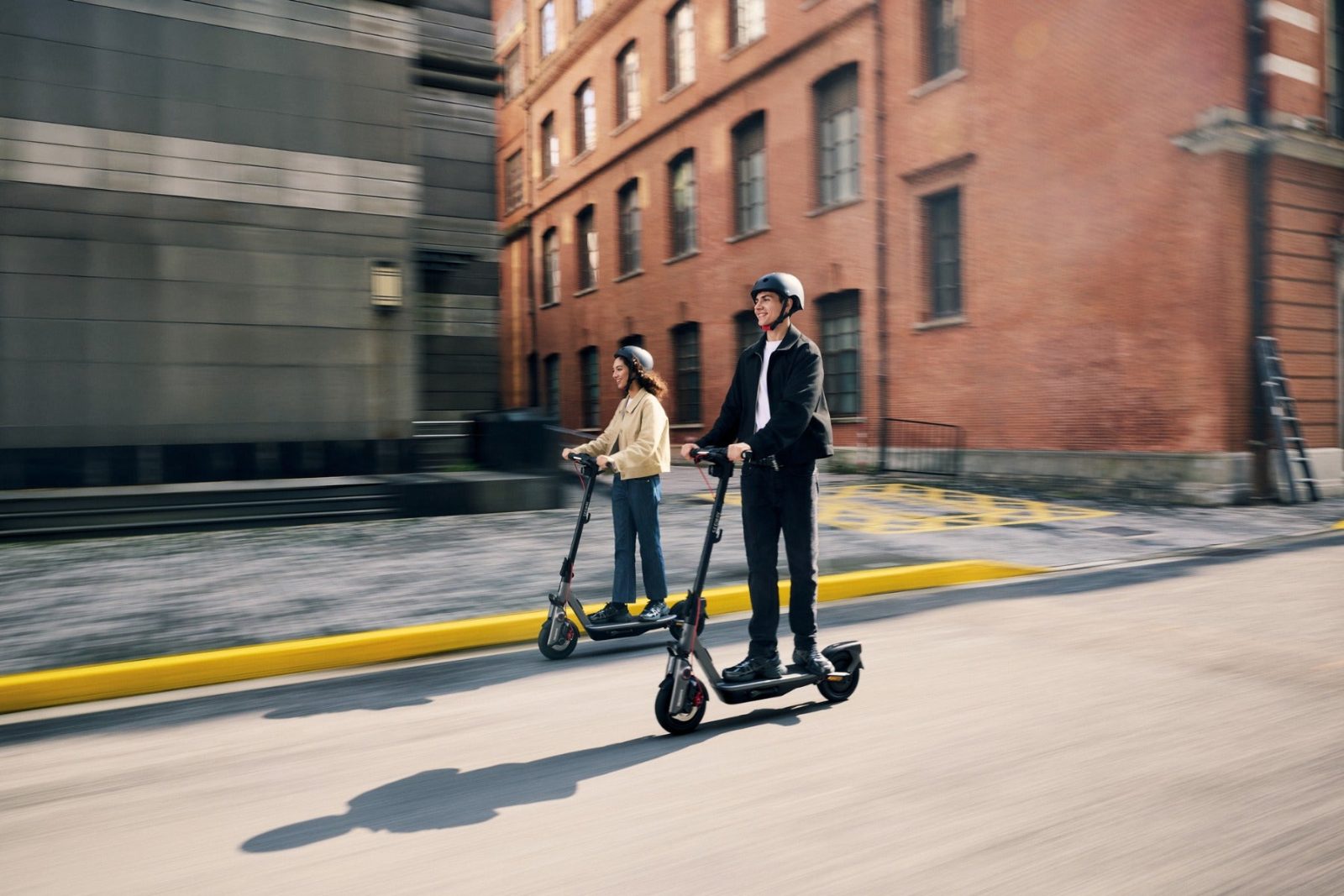
Commuting to work in Strasbourg by electric scooter is possible, pleasant and often quicker than you’d think. With the densest cycle network in France, a compact city centre and daily traffic jams at rush hour, the Alsatian capital is ideal territory for micro-mobility. Here is our complete guide to turning your commute into something simple, safe and economical.
Why the electric scooter is made for Strasbourg
Strasbourg is regularly ranked among the most cycle-friendly cities in France, with several hundred kilometres of cycling infrastructure. And electric scooters use exactly the same infrastructure: cycle tracks, cycle lanes and 30 km/h zones. For an urban journey of 3 to 10 km, the scooter easily rivals the car, without the parking problems or the cost of fuel.
Another advantage: the scooter combines very well with the train and the tram. A folding model slips onto the TER regional train from Obernai, Molsheim or Sélestat, then takes you from Strasbourg station to the office in a few minutes. The famous “last mile”, solved.
How long does a typical journey take?
At the legal speed, allow about 4 to 5 minutes per kilometre in town, traffic lights included. A journey from Strasbourg station to the European quarter usually takes a quarter of an hour. On well-equipped routes such as the banks of the Ill or the avenue de la Forêt-Noire, the scooter is often more consistent than the car, whose journey time explodes at rush hour.
The rules to know before you set off
An electric scooter is an EDPM (the French category for motorised personal transporters). The main rules to remember:
Speed limited to 25 km/h on public roads. This is the national rule, valid everywhere in France: a derestricted scooter, or one exceeding 25 km/h, isn’t allowed on roads, cycle tracks or pavements, and you risk a fine and having the vehicle confiscated. Very powerful models such as Dualtron or Nami must therefore be limited to 25 km/h for use on public roads; their higher potential is reserved for private land.
Other obligations include: being at least 14 years old, riding alone on the vehicle (no passenger), having specific EDPM third-party liability insurance, using cycle tracks and lanes where they exist, and fitting front and rear lights, brakes and a horn. A helmet isn’t compulsory for adults in built-up areas, but it’s strongly recommended — it’s the piece of equipment that changes everything in a fall. At night or in poor visibility outside built-up areas, a retro-reflective vest is compulsory.
In Strasbourg as elsewhere, riding a scooter on the pavement is forbidden (except with the motor off, pushing it). Pedestrian zones in the city centre require walking pace; check the local rules of the Eurométropole, which can change.
Choosing the right scooter for commuting
The criteria that really matter
For daily use, four criteria come first. Range, to begin with: aim for a real-world range covering at least twice your round trip, to keep a margin in winter. Then comfort: in Strasbourg, between the cobbles of the centre and the joints in the cycle tracks, pneumatic tires of at least 10 inches or suspension make a real difference. Weight, if you take the train or climb stairs: above 20 kg, carrying it becomes a workout. Finally, water resistance: good protection against rain is essential in the east of France.
A higher budget generally brings a better battery, safer braking and a longer life — an important point when the vehicle is used every day. Discover our selection of electric scooters suited to daily commuting, from light city models to high-comfort machines.
And if the journey is long or hilly?
Beyond 15 km per journey, or if your route climbs (Hautepierre, the foothills), an electric bike or a speed bike may make more sense: a more comfortable position, better range, powerful lighting. Speed bikes such as Stromer can reach 45 km/h, but be careful: they fall under different rules (registration, approved helmet, insurance, banned from most cycle tracks). For a purely urban journey in Strasbourg, a scooter or a standard electric bike remain the simplest choices.
Our tips for a stress-free daily commute
Scout your route at the weekend, at a relaxed pace: favour continuous cycle routes rather than the shortest path. Plan your charging: a full charge takes several hours, so get into the habit of plugging the scooter in when you arrive at the office or in the evening. Gear up for rain and cold: gloves, a waterproof jacket, and smoother riding on wet cobbles and tram rails — always cross the rails at right angles. Finally, park smart: a U-lock and a fixed point, or better still, the scooter folded under your desk.
Think about regular maintenance too: tire pressure every week, checking the brakes and the fasteners. Our workshop in Obernai maintains and repairs your scooter or electric bike so that your daily commute stays free of nasty surprises.
FAQ: electric scooters and commuting in Strasbourg
Can I take my scooter on the tram or the TER?
As a rule, a folded scooter is accepted as hand luggage on the TER and the tram, outside very busy times. As conditions can change, check the current rules with SNCF and CTS before getting into the habit of a combined journey.
What range do I need for a daily round trip?
Take your round-trip distance and multiply it by two: that’s the minimum real-world range to aim for. Cold, wind, terrain and the rider’s weight noticeably reduce the range announced by manufacturers, especially in winter.
Can my employer contribute to the costs?
The sustainable mobility allowance (forfait mobilités durables) lets many employers cover part of the cost of green commuting, including a personal scooter in some cases. Ask your HR department about the conditions that apply in your company.
Fancy commuting by scooter? Come and try several models in our Obernai shop — contact us, and the Vélo Shop team will help you find the right vehicle for your route.
A question about your machine? We’ll take care of it.
Diagnosis, adjustment, bringing a machine back within the rules: we answer at the counter just as on the phone, no appointment needed.
Read next
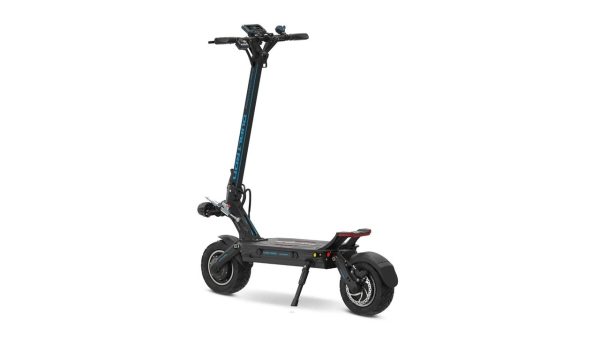
Dualtron Thunder, Storm or Victor: which one to choose in 2026?
Dualtron is one of the best-known brands in the world of high-end electric scooters. Three models come up again and…
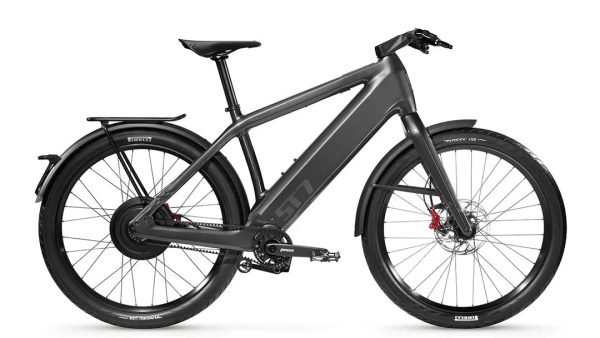
Speed pedelec or 25 km/h e-bike: how to choose?
Five years after we started selling speed pedelecs, we're seeing an unexpected acceleration. Here's what we've learned on the ground.
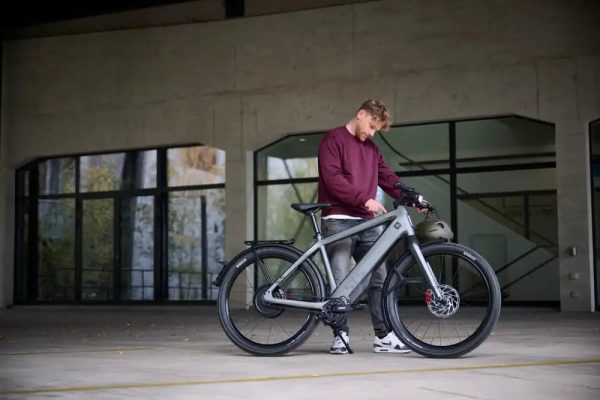
Stromer ST3: review, range and who is it for?
The Stromer ST3 is a benchmark among fast electric bikes (speed bikes). Designed to eat up everyday kilometres, it's aimed…