
Electric bike or speed bike for commuting?
25 km/h or 45 km/h? Distance, real time saved, overall cost and route: the four criteria that decide between an electric bike and a speed bike for getting to work.
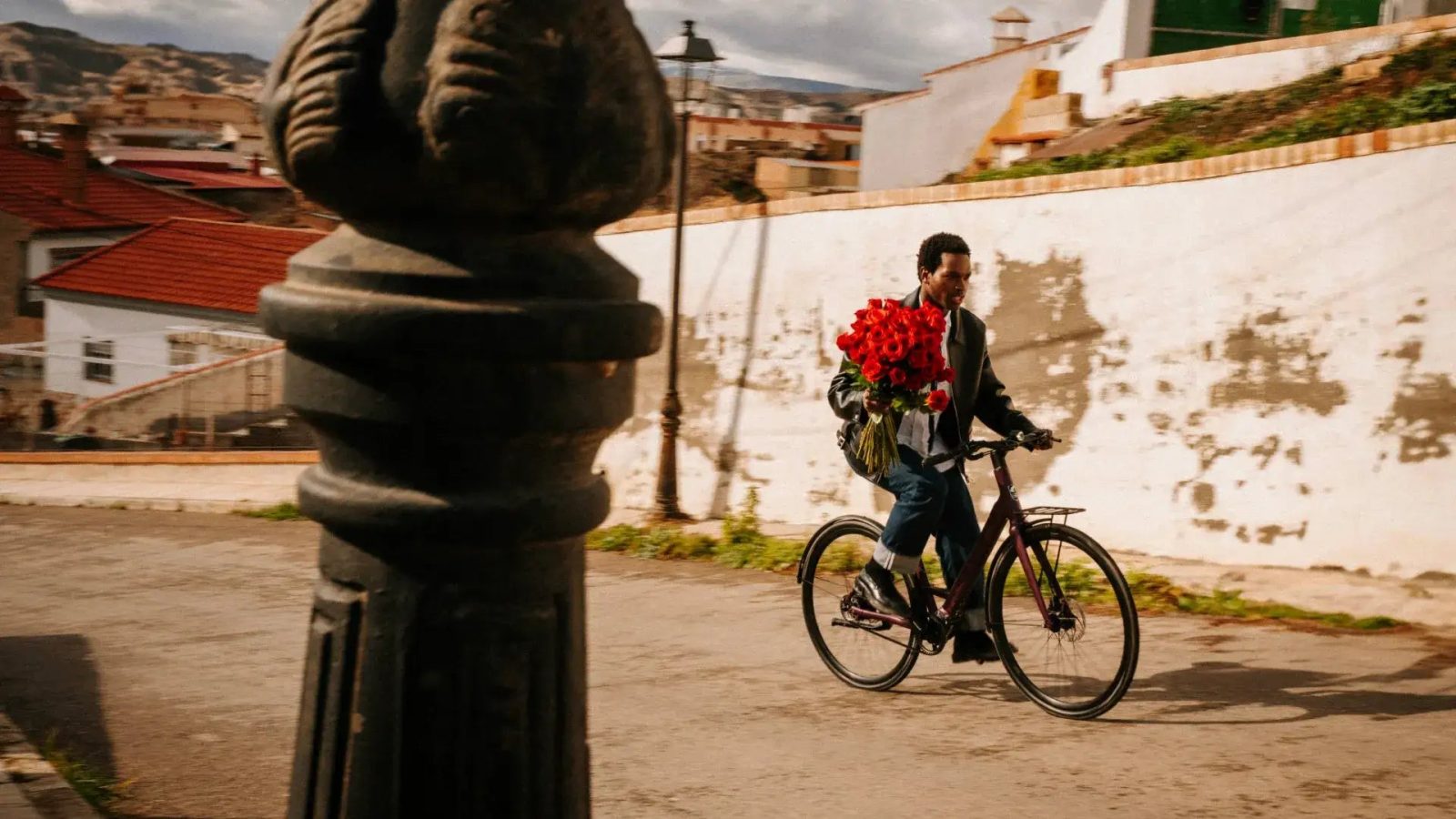
Twelve kilometres in the morning, twelve in the evening, five days a week. That’s the typical journey behind the question we hear most often in the shop: should you go for a standard electric bike, or for a speed bike that assists up to 45 km/h? Both can replace the car. But they don’t cost the same, don’t ride in the same places and aren’t suited to the same journey. Here’s how to decide, with the criteria that really count on a daily commute.
The difference comes down to a single figure: 25 km/h
An electrically assisted bicycle (e-bike) cuts its assistance at 25 km/h on public roads. Beyond that, you keep pedalling, but without the motor. This is the rule for the vast majority of electric bikes and scooters in France, and it’s what keeps the e-bike in the “cycle” category: no registration, no number plate, no licence, access to cycle lanes.
A speed bike (also called a speed pedelec) assists up to 45 km/h. This simple difference in speed puts it in another legal category: it becomes a moped, with the obligations that go with it — registration, dedicated insurance, an approved motorcycle helmet, certified gloves, and an AM licence for people born after 1st January 1988 who hold no other licence. You still pedal, but in the eyes of the law you’re no longer riding a bicycle.
Everything else in the decision follows from there.
Step 1: measure your journey, not your wishes
This is the number one criterion, by far. Take your real route, the one you’ll ride twice a day in November in the rain — not your Sunday ride.
Less than 10 km per journey
The e-bike wins almost every time. Over this distance, your real average speed is dictated by traffic lights, junctions and traffic-calmed zones, not by top speed. A speed bike would save you a few minutes, in exchange for a number plate, insurance and a full-face helmet. It’s not worth it.
Between 10 and 15 km
This is the grey zone, where the terrain and the type of road decide. A flat journey in town with a continuous cycle network: stay with an e-bike. A hilly journey, or a long stretch of fast main road: the speed bike starts to make sense.
Beyond 15 km
The speed bike takes the lead. Over 20 or 25 km, the difference in assistance becomes a concrete time saving, often ten to fifteen minutes per journey. That’s where it really replaces a car, including when you have to arrive at a fixed time.
Step 2: count the real time saved
Beware of the shortcut “45 km/h, so almost twice as fast”. Nobody holds 45 km/h from start to finish: there are starts, junctions, restricted zones, the wind and your own fitness. In practice, a speed bike’s average speed on a mixed journey is well below its top speed.
The right method: time your current journey, then subtract the time lost where you’re held back today. Lots of stops in town: a modest gain. A long clear stretch: a clear gain.
Step 3: the real cost, beyond the price tag
To buy, speed bikes sit above city e-bikes: a reinforced frame, more serious brakes, a big battery. But the difference doesn’t stop at the till. For a speed bike, you need to add:
- registration and the number plate;
- moped-type insurance, which is compulsory and costs more than bicycle cover;
- an approved motorcycle helmet and certified two-wheeler gloves;
- the AM licence if you’re not exempt;
- slightly more demanding maintenance — at 45 km/h, pads and tires wear faster.
On the other side, count what you save: fuel, parking, wear on the car, sometimes a second car the household no longer needs. On a long journey made all year round, the sums often tip in favour of the speed bike despite its costs. On a short journey, never.
Step 4: does your route allow it?
This is the point people discover too late, and it’s decisive. Because it’s classed as a moped, a speed bike rides on the road, with the cars. Cycle tracks and lanes are in principle off-limits to it, unless a local by-law says otherwise.
So take an honest look at your journey. If it mainly uses a cycle route or separate infrastructure, a speed bike will force you to ride on the road alongside — sometimes less pleasant than the track you had in mind. If you already ride on the road for lack of infrastructure, the constraint is zero.
The summary
| Criterion | Electric bike (25 km/h) | Speed bike (45 km/h) |
|---|---|---|
| Ideal distance | Up to 15 km | 15 to 30 km |
| Legal status | Cycle | Moped |
| Registration | No | Yes |
| Dedicated insurance | Not compulsory | Compulsory |
| Helmet | Recommended | Approved motorcycle helmet, compulsory |
| Licence | None | AM, unless exempt |
| Cycle lanes | Yes | No, in principle |
| Overall budget | More contained | Higher, to buy and to run |
Our advice by profile
You ride less than 12 km, in town, with a cycle network: an electric bike is the rational choice. Put the budget into the battery, the brakes and good lighting rather than speed. An electric hybrid bike suits this profile very well, including with a rack and mudguards to ride all year round.
You ride 15 km or more, with hills or open road: take a serious look at a 45 km/h speed pedelec. Factor registration, insurance and equipment into the initial budget, not as an afterthought.
Still unsure: start with the e-bike. It’s the easiest choice to live with, and many journeys you thought were long turn out to be perfectly manageable at 25 km/h once you actually ride them.
FAQ
Can a speed bike be limited to 25 km/h so you can ride it like a bicycle?
No. A vehicle’s status depends on its type approval, not on a setting: a speed bike approved as a moped remains one, even if you never exceed 25 km/h. Conversely, derestricting an e-bike moves it into another legal category, without valid approval or insurance — a very bad idea, especially in the event of an accident.
Is the range enough for a daily round trip?
In the vast majority of cases, yes, as long as you size the battery for the round trip and not the one-way journey. The range announced by manufacturers corresponds to favourable conditions: keep a margin for cold, wind, hills and ageing. Better a slightly oversized battery than one drained completely every day.
And to sweat as little as possible?
That’s often the real issue when you’re going to the office. Both types solve the problem, as long as you let the motor do the work and don’t turn the commute into a workout. The speed bike has a slight advantage: you ride faster for the same effort, so you spend less time outside.
The best way is still to try them
A table will never replace ten minutes in the saddle. An e-bike at 25 km/h and a speed bike at 40 feel very different, and one of the two will seem obvious to you straight away. We have both types in our Obernai shop, and our workshop then takes care of the maintenance. Contact us to book a test ride and tell us about your journey: we give the best advice by starting from your real kilometres.
A question about your machine? We’ll take care of it.
Diagnosis, adjustment, bringing a machine back within the rules: we answer at the counter just as on the phone, no appointment needed.
Read next
Dualtron Thunder, Storm or Victor: which one to choose in 2026?
Dualtron is one of the best-known brands in the world of high-end electric scooters. Three models come up again and…
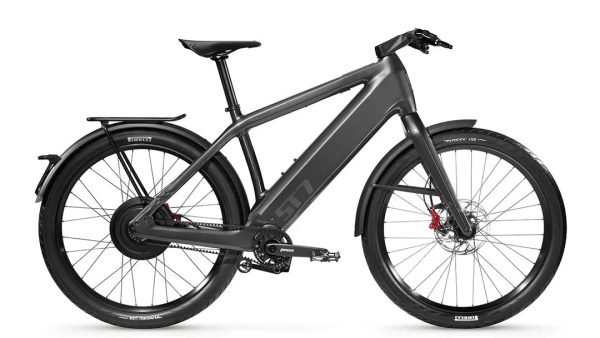
Speed pedelec or 25 km/h e-bike: how to choose?
Five years after we started selling speed pedelecs, we're seeing an unexpected acceleration. Here's what we've learned on the ground.
Electric mountain bike: full suspension or hardtail? How to choose
Full suspension or hardtail? The real criteria for choosing your electric mountain bike: terrain, budget, maintenance, comfort. Comparison and advice…