
Real range of an electric scooter: the guide
“Up to 60 km of range”: the promise is attractive, but what is it really like once you're on the road? Therange of an electric scooter is the first buying criterion for most riders, and it's also the one with the most surprises. In…
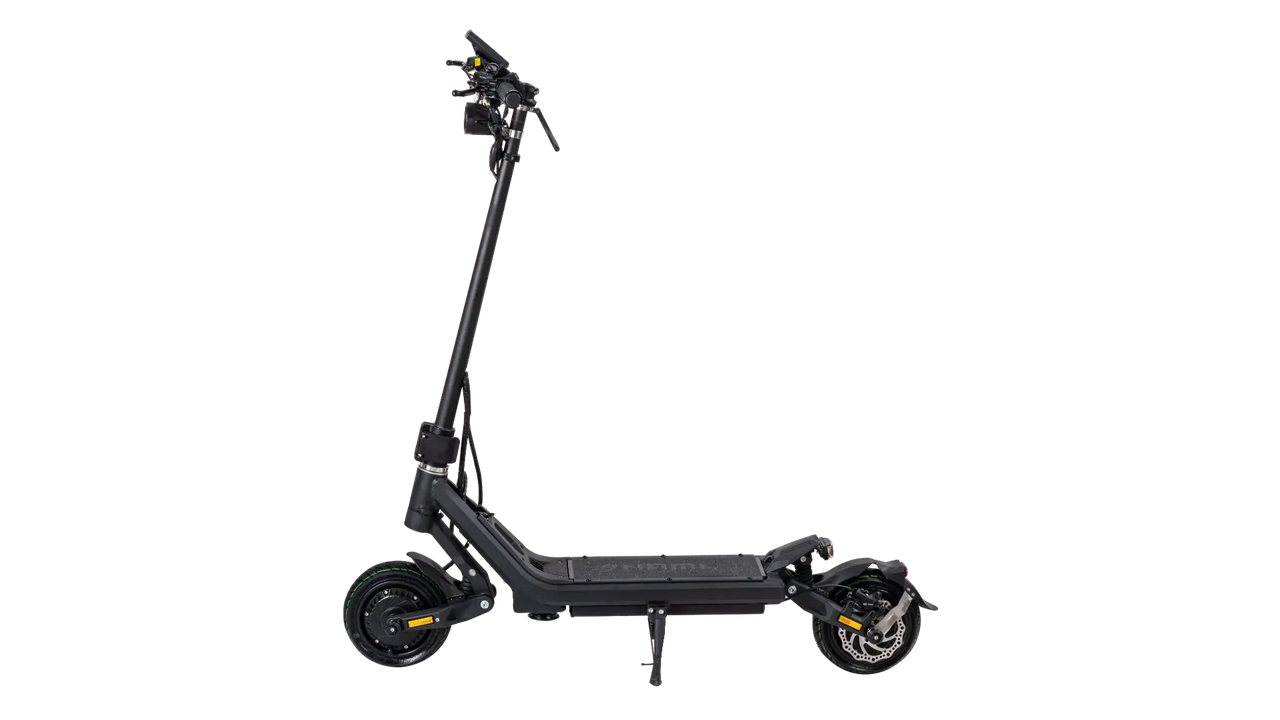
“Up to 60 km of range”: the promise is attractive, but what is it really like once you’re on the road? Therange of an electric scooter is the first buying criterion for most riders, and it’s also the one with the most surprises. In practice, real-world range is often between 50 and 70% of the figure announced by the manufacturer. Why such a gap? Which factors come into play, and above all, how can you estimate the kilometres you’ll actually ride day to day? Follow the Vélo Shop Obernai team’s guide.
Claimed range vs real range: why such a gap?
The ranges displayed by manufacturers aren’t lies, but they are measured in ideal conditions: a light rider, a moderate and steady speed, perfectly flat ground, mild temperatures and an economy riding mode.
In real life, your journey rarely looks like a laboratory. Stopping and starting at junctions, hills, headwinds, cold or a heavy backpack all push consumption up. The result: a scooter rated at 50 km often covers 25 to 35 km in real use.
Remember this simple rule: count on about 60% of the claimed range to get an honest estimate, and adjust it to your profile using the factors below.
The factors that affect your scooter’s range
The weight on board
This is the number one factor. The heavier the rider (and their bag), the more the motor draws on the battery, especially when accelerating and climbing. A 20 kg difference between two riders can mean several kilometres less range.
Terrain and surface
Hills use a lot of energy: that’s where the motor delivers its maximum power. The surface matters too: cobbles, gravel or under-inflated tires increase rolling resistance and eat into the range kilometre after kilometre.
The outside temperature
Lithium batteries don’t like the cold. In winter, a 20 to 30% loss of range is common, because the battery’s internal chemical reactions slow down. Storing and charging your scooter indoors greatly limits this effect.
Riding style and speed
Hard acceleration and top speed drain the battery. Remember that in France, the speed of an electric scooter is limited to 25 km/h on public roads : riding at the legal pace is not only compulsory, it’s also far more energy-efficient. The higher performance of some models is reserved for private land.
Battery age and care
A battery gradually loses capacity over its charge cycles. A three-year-old scooter will no longer quite deliver the range it had when new. Regular maintenance and good charging habits slow this ageing down.
Watt-hours (Wh): the real figure to compare
Rather than comparing claimed kilometres, compare the actual capacity of the batteries, expressed in watt-hours. The calculation is simple:
Voltage (V) × capacity (Ah) = energy (Wh)
For example, a 48 V, 15 Ah battery holds about 720 Wh. In urban use, a scooter uses roughly 15 to 25 Wh per kilometre depending on the rider’s build, the terrain and the weather. This 720 Wh battery would therefore give about 30 to 45 real kilometres. These figures are orders of magnitude, but they give a far more reliable basis for comparison than marketing ranges.
What range for what use?
There’s no point oversizing if you ride 5 km a day; conversely, it’s better to aim high if you clock up the kilometres, because constantly riding at the limit of the range wears the battery out faster.
For short commutes, most of the urban models in our electric scooter collection are more than enough. For long daily distances or hilly routes, go for machines with big batteries such as Dualtron scooters or Nami models, known for their generous capacities and their comfort over long rides.
7 tips to gain kilometres
A few simple habits help you get the most range out of any scooter:
- Check your tire pressure every two weeks: under-inflated tires can cost 10 to 15% of your range.
- Ride smoothly: accelerate gradually and anticipate braking.
- Use eco mode in town — it’s more than enough to ride at 25 km/h.
- Store and charge the battery at room temperature, especially in winter.
- Avoid leaving the battery completely empty or at 100% for long periods.
- Travel light: every extra kilo costs energy.
- Have your scooter checked regularly: rubbing brakes or worn bearings waste energy. Our repair workshop in Obernai takes care of it, all brands included.
FAQ: your questions about range
How long does an electric scooter battery last?
A lithium battery generally handles between 500 and 1 000 full charge cycles before losing a noticeable share of its capacity — several years of normal use. Good charging habits and storage away from the cold significantly extend its life.
Can you increase your scooter’s range?
You can’t “derestrict” a scooter for public roads — the 25 km/h limit is compulsory — but you can optimise: well-inflated tires, smooth riding, a well-maintained battery. Some models also accept a higher-capacity battery or a second battery; come and see us in the shop to check compatibility for your model.
Is the range announced by manufacturers reliable?
It’s measured in optimal conditions that rarely come together day to day. Treat it as a theoretical maximum, compare Wh capacities instead and apply the 60% rule to estimate your real range.
The final word
The real range of an electric scooter depends above all on you: your build, your journeys, your riding and how well you look after the battery. The best way not to get it wrong is to talk it through with specialists: at Vélo Shop in Obernai, we help you choose the model whose range really matches your journeys, and our workshop looks after your machine season after season.
A question about your machine? We’ll take care of it.
Diagnosis, adjustment, bringing a machine back within the rules: we answer at the counter just as on the phone, no appointment needed.
Read next
Stromer ST3: review, range and who is it for?
The Stromer ST3 is a benchmark among fast electric bikes (speed bikes). Designed to eat up everyday kilometres, it's aimed…
Rovoron R7: test and workshop review (2026)
Dual motor 1 800 W, 60V 28Ah, ~90 km of range for 990 €: our workshop's verdict on the Rovoron…
Dualtron Thunder, Storm or Victor: which one to choose in 2026?
Dualtron is one of the best-known brands in the world of high-end electric scooters. Three models come up again and…